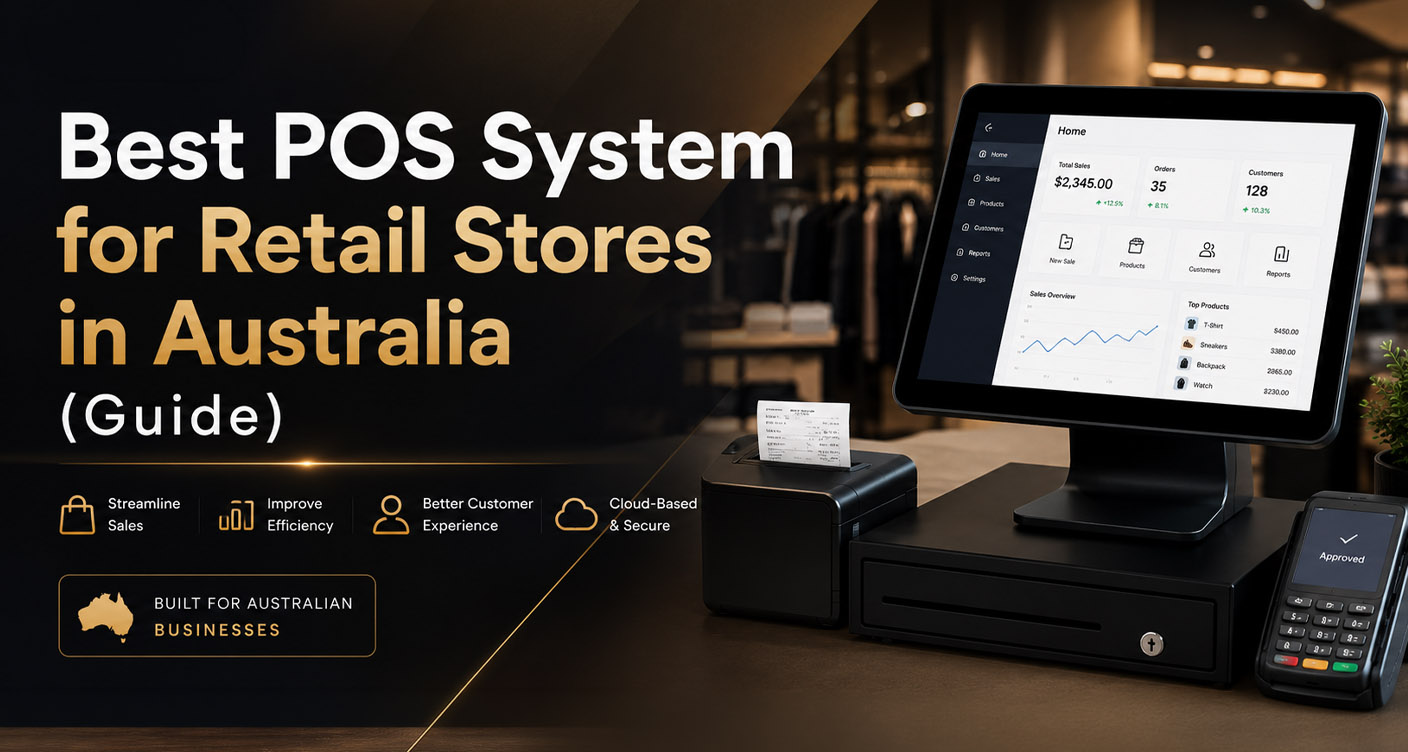
Best POS System for Retail Stores in Australia (Guide)
Published by - Mahesh Gupta on May 13, 2026 Guide
Choosing the right retail POS system in Australia is one of the most important technology decisions a store owner will make. The right setup streamlines your checkout, keeps inventory accurate, integrates with Xero or MYOB, and – critically – doesn’t let you down at 5pm on a Saturday when the queue is out the door.
This guide covers everything you need to know: what to look for in a retail point of sale system, the top software options for Australian retailers, the hardware you actually need, and a realistic breakdown of what it will cost. Whether you run a boutique clothing store in Melbourne, a homewares shop in Brisbane, or a multi-location retailer across New South Wales, you’ll find a clear path forward here.
What to Look for in a Retail POS System
Not all POS systems are created equal. Before comparing software brands, get clear on the features that matter most for retail operations in Australia.
Hardware reliability and compatibility
Your POS hardware needs to work every single day. Downtime at checkout means lost sales and frustrated customers. Look for a system that supports industry-standard peripherals — thermal receipt printers, barcode scanners, cash drawers, and label printers — from reputable brands like Epson, Zebra, Honeywell, and Star Micronics. Proprietary hardware lock-in is a red flag: always confirm that the POS software you choose supports third-party hardware so you’re not paying inflated prices for the vendor’s own branded devices.
Fast and accurate barcode scanning
Retail stores live and die by inventory accuracy. Your POS system needs to handle barcode scanning seamlessly — whether you’re scanning a single item at the counter or doing a stocktake of 2,000 SKUs in the back room. Look for software with a solid inventory management module and pair it with a reliable barcode scanners that can handle 1D and 2D barcodes across your full product range.
Inventory management across locations
For single-store retailers, basic stock tracking is usually enough. But if you operate across two or more locations – or sell both in-store and online — you need a POS system with real-time, multi-location inventory sync. This prevents overselling, helps with reordering, and gives you accurate data for buying decisions.
Payment flexibility including BNPL
Australian shoppers increasingly expect buy-now-pay-later options at the checkout. Afterpay, Zip Pay, and Klarna are no longer optional for many retail categories. Confirm your POS software integrates natively with these providers, and that your EFTPOS terminal supports contactless and digital wallet payments (Apple Pay, Google Pay). A POS system that locks you into a single payment processor with high fees is worth avoiding.
Accounting integration: Xero and MYOB
Australia’s two dominant small-business accounting platforms are Xero and MYOB. Your POS system should integrate cleanly with whichever you use – syncing sales data, GST reporting, and end-of-day reconciliation automatically. Manual data entry between your POS and your accounts is a time sink and an error risk. This integration alone can save several hours per week.
Top POS Software Options for Australian Retailers
The POS software market in Australia is competitive. Here are the most widely used platforms for retail, with an honest overview of each.
Lightspeed Retail
Lightspeed Retail (formerly Vend) is one of the most feature-rich cloud-based POS systems available to Australian retailers. It excels at inventory management – particularly for businesses with large or complex catalogues – and offers robust reporting, multi-location support, and solid integrations with Xero, Shopify, and various loyalty platforms. Pricing starts at approximately AUD $129 per month on an annual plan. It’s best suited to established retailers who need depth of functionality and are prepared to invest time in the setup process.
Shopify POS
Shopify POS is the natural choice for retailers who already use Shopify for their online store. The platform provides seamless omnichannel inventory sync, meaning what sells in-store is immediately reflected online and vice versa. It supports Afterpay and a wide range of payment gateways, and integrates well with Xero via third-party connectors. Shopify POS Lite is included with all Shopify plans; the Pro version (required for advanced in-store features) costs approximately AUD $99 per month on top of your Shopify subscription.
Vend by Lightspeed
Vend — now operating under the Lightspeed brand – was one of the first cloud POS systems to gain serious traction with Australian independent retailers. It remains a strong option for boutique stores and specialty retailers who prioritise ease of use, reliable offline mode, and a clean interface. Customer loyalty features are built in, and it integrates with Xero, MYOB, and WooCommerce. Hardware compatibility is broad, which is an advantage when you’re sourcing equipment from OnlyPOS rather than paying inflated bundle prices from the software vendor.
Square for Retail
Square for Retail is the most accessible entry point for small and new retail businesses. There are no monthly software fees — you pay only a transaction processing rate of 1.6% per tap or card insert. The trade-off is that reporting and inventory management are less sophisticated than Lightspeed or Vend, making it better suited to simple retail operations with smaller catalogues. Square integrates with Xero and supports Afterpay. Hardware is straightforward to set up, and Square’s own card readers are compact and cost-effective for low-volume stores.
MYOB RetailManager
MYOB RetailManager is worth considering for retailers who are already deeply embedded in the MYOB ecosystem. It provides strong accounting integration by design, solid inventory management, and is built for Australian compliance requirements including GST reporting. It’s an on-premise (locally installed) system, which some retailers prefer for reliability and data control. MYOB RetailManager is particularly popular with established independent retailers who have been operating for many years and value local support.
Essential POS Hardware for Retail Stores
Choosing the right software is only half the equation. The hardware you pair it with determines the day-to-day reliability of your entire operation. Here’s what every retail store needs, and what to look for in each category.
Barcode scanners
A good barcode scanners is essential for fast checkout and accurate stocktaking. For most retail environments, a corded USB handheld scanner is the most cost-effective option – reliable, fast, and compatible with virtually every POS system. Wireless Bluetooth scanners offer more flexibility on the floor during stocktakes. For high-volume or industrial retail environments, consider a presentation scanner or omnidirectional unit mounted at the counter. Brands like Zebra, Honeywell, and Datalogic offer excellent options at a range of price points.
Receipt printers
The receipt printers is the workhorse of the retail checkout. Thermal receipt printers are the standard -they’re fast, quiet, and don’t require ink cartridges. Look for a model that supports your connection type (USB, Ethernet, Bluetooth, or all three), has an auto-cutter, and carries a print speed of at least 200mm per second for busy counters. Epson’s TM-T88 series and the Star Micronics TSP100 series are the two most widely used thermal printers in Australian retail and are compatible with virtually every POS platform.
Cash drawers
Even in an increasingly cashless society, most Australian retailers still handle cash transactions and require a cash drawers. Look for a drawer that connects via RJ11 to your receipt printer (the most common setup) or via USB to your POS terminal. Key specs to consider: number of note and coin slots, steel construction for durability, and a quality lock mechanism. The Nexa CB-910 is a popular, reliable option for Australian retailers. Size matters too – measure your counter space before purchasing.
Label printers
Retail stores that price their own stock, manage incoming shipments, or maintain a large SKU catalogue benefit enormously from a dedicated label printers. Desktop thermal label printers from brands like Zebra, TSC, and Citizen can print barcode labels, shelf-edge labels, and hang tags quickly and cost-effectively. For fashion retailers, a label printer is essential for ticketing clothing lines. For food and grocery retailers, date-coding labels are a compliance requirement.
POS terminals
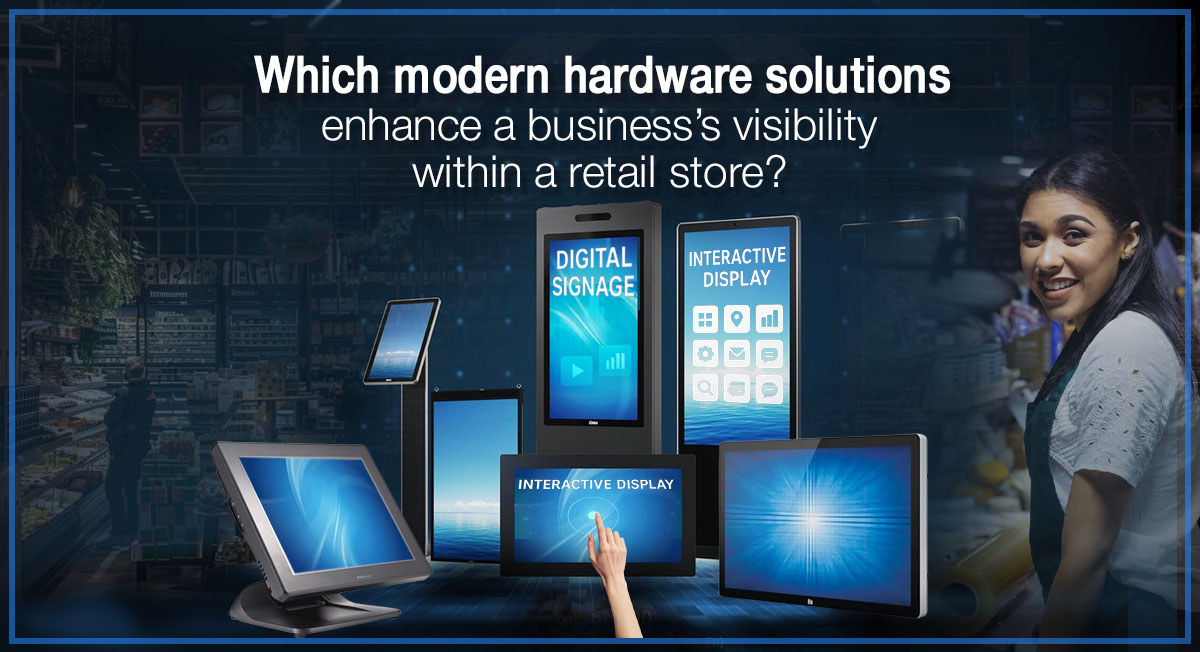
Your POS terminals is the hub that ties everything together. All-in-one touchscreen terminals from brands like Posiflex, Probus, and Elo offer robust, purpose-built hardware that outperforms consumer iPads in a retail environment – particularly in terms of longevity, heat tolerance, and continuous-use reliability. For retailers who prefer a tablet-based setup, iPad holders and stands are available alongside compatible peripherals.
How Much Does a Retail POS System Cost in Australia?
Budgeting for a retail POS system in Australia involves two separate cost categories: software and hardware.
Software costs vary widely depending on the platform. Square for Retail has no monthly fee (transaction fees apply). Shopify POS ranges from included in your plan to approximately AUD $99/month for the Pro tier. Lightspeed Retail starts at approximately AUD $129/month. Annual plans typically offer a 10–20% discount over month-to-month pricing.
Hardware costs for a standard single-register retail setup typically fall in the following range:
| Hardware item | Approximate cost (AUD) |
|---|---|
| POS terminal / all-in-one touchscreen | $600 – $1,200 |
| Thermal receipt printer | $180 – $400 |
| Barcode scanner (corded) | $80 – $250 |
| Cash drawer | $80 – $180 |
| Label printer (optional) | $200 – $600 |
| Total hardware (single register) | $940 – $2,630 |
For a two-register setup, budget approximately AUD $1,800–$5,000 for hardware. These are one-time costs – quality POS hardware from reputable brands typically lasts five to ten years with proper care.
OnlyPOS: Your Retail POS Hardware Partner in Australia
OnlyPOS is one of Australia’s largest dedicated POS hardware suppliers, based in Castle Hill, Sydney, and shipping to retailers across the country – including Tasmania and Norfolk Island – with a 24-hour dispatch guarantee. The online store carries the full range of hardware a retail business needs: receipt printers, barcode scanners, cash drawers, label printers, POS terminals, and consumables, from brands including Epson, Zebra, Honeywell, Star Micronics, Posiflex, Datalogic, TSC, and Citizen. Prices on the site are GST-inclusive, and OnlyPOS offers a price-match guarantee — if you find the same product cheaper elsewhere, they’ll match it. The team is available by phone and email to help retailers choose the right hardware for their specific POS software and environment.
Frequently Asked Questions
What is the best POS system for a small retail store in Australia?
For small retail stores with straightforward operations, Square for Retail is the most accessible starting point – no monthly software fees and simple setup. For stores with larger catalogues or multi-location needs, Lightspeed Retail or Vend offer more powerful inventory tools. In all cases, pair your chosen software with quality hardware from a reliable supplier to avoid downtime.
Do I need special hardware for my retail POS system?
Most modern cloud-based POS systems are compatible with standard retail POS hardware – thermal receipt printers, USB or Bluetooth barcode scanners, and cash drawers connected via RJ11. You don’t need proprietary hardware from your software vendor. Purchasing hardware independently from a specialist like OnlyPOS typically results in better pricing and a wider choice of brands and specs.
How long does retail POS hardware last?
Quality thermal receipt printers and barcode scanners from brands like Epson, Zebra, and Honeywell are designed for continuous commercial use and typically last five to ten years with basic maintenance. Consumer-grade hardware (such as generic USB scanners) tends to fail faster in a busy retail environment. Investing in commercial-grade equipment from the outset reduces total cost of ownership significantly.
Can I use my existing hardware with a new POS software?
In most cases, yes – provided your existing hardware is from a mainstream brand and uses standard connections (USB, Ethernet, RJ11). Check the hardware compatibility list of your chosen POS software before switching platforms. If your hardware is older or from a less-known brand, it may be worth upgrading to ensure full compatibility and support.
Conclusion
There is no single “best” retail POS system for every Australian store – the right choice depends on your catalogue size, the number of locations you operate, your accounting software, and your budget. But the foundation is always the same: reliable hardware, compatible software, and a supplier you can count on when something goes wrong.
If you’re ready to set up or upgrade your retail POS hardware, explore the full range at OnlyPOS.com.au. From thermal receipt printers and barcode scanners to cash drawers and all-in-one POS terminals, OnlyPOS supplies the hardware Australian retailers trust – with fast shipping, competitive pricing, and a team that knows POS inside out.
Browse retail POS hardware at OnlyPOS →